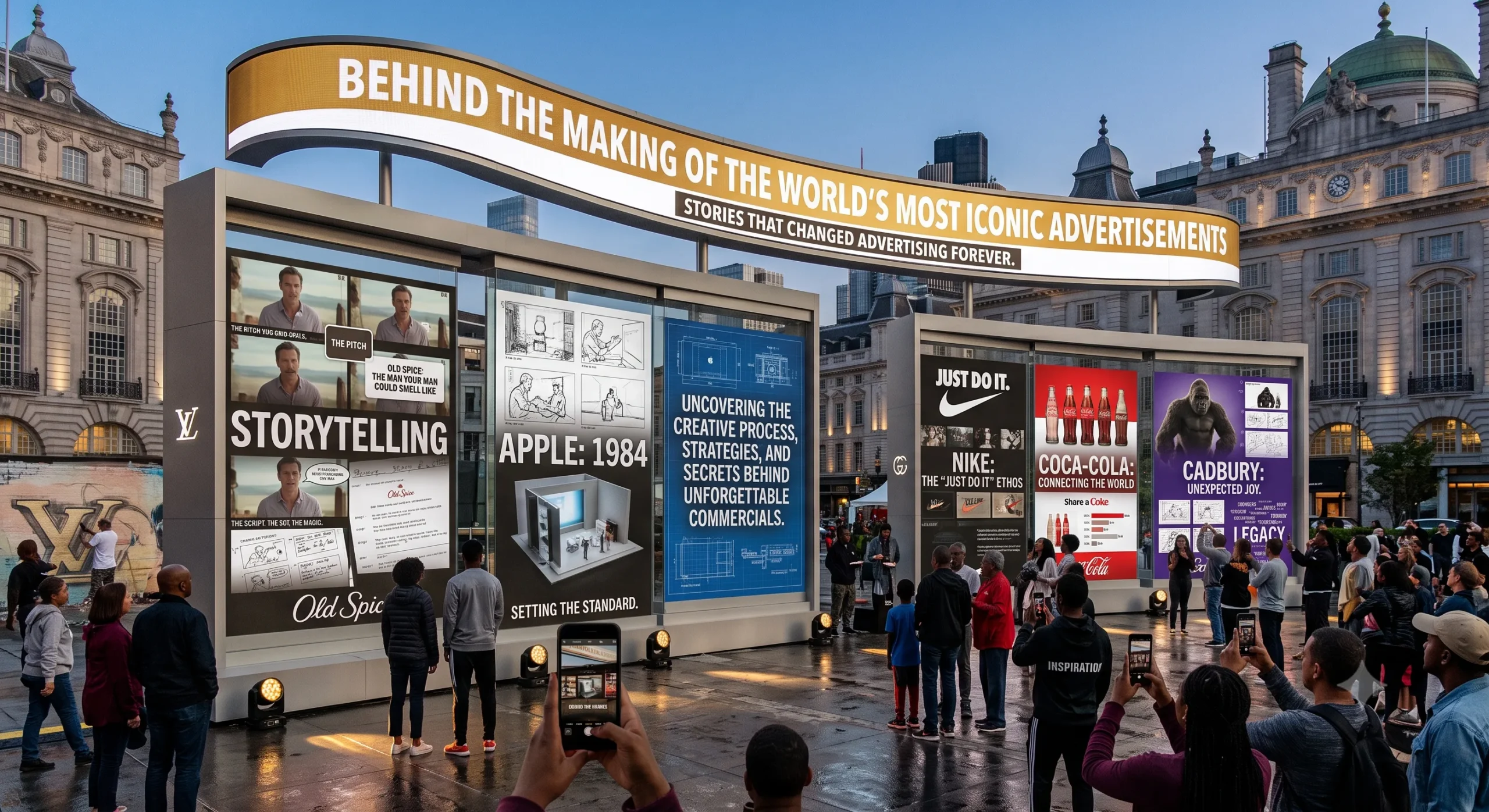
Behind the Making of the World’s Most Iconic Advertisements – Stories That Changed Advertising Forever
Ever wondered how the world’s most iconic advertisements were created? Discover the creative process, behind-the-scenes stories, and marketing strategies that turned famous commercials into global masterpieces.
Some advertisements become much more than marketing campaigns—they become cultural moments remembered for decades. Behind every iconic commercial lies months of brainstorming, creative storytelling, detailed planning, and massive production efforts.
From Nike’s “Just Do It” to Apple’s “1984” and Coca-Cola’s “Share a Coke”, these campaigns transformed the advertising industry and influenced millions around the world.
Let’s explore the fascinating stories behind some of the world’s most iconic advertisements.
1. Nike – Just Do It
Launched in 1988, Nike’s “Just Do It” campaign became one of the most recognizable slogans in history.
Behind the Making
The creative team wanted a slogan that inspired everyone—not just professional athletes. Instead of focusing on products, they highlighted determination, courage, and personal achievement.
Why It Worked
Simple but powerful message
Emotional storytelling
Universal appeal
Strong athlete partnerships
2. Apple – 1984
Apple’s legendary “1984” commercial introduced the Macintosh computer during the Super Bowl.
Behind the Making
Directed by acclaimed filmmaker Ridley Scott, the commercial featured cinematic visuals inspired by George Orwell’s novel 1984.
Apple reportedly invested millions into production, creating one of the most famous television commercials ever made.
Why It Worked
Hollywood-quality filmmaking
Minimal product promotion
Powerful storytelling
Memorable launch strategy
3. Coca-Cola – Share a Coke
Instead of simply displaying its logo, Coca-Cola replaced it with popular first names on bottles.
Behind the Making
The idea focused on making customers feel personally connected to the brand. Social media sharing quickly amplified the campaign worldwide.
Why It Worked
Personalized marketing
User-generated content
Strong emotional connection
Massive social media engagement
4. Old Spice – The Man Your Man Could Smell Like
Old Spice completely reinvented its image with one of advertising’s funniest campaigns.
Behind the Making
The commercial featured rapid scene changes, humorous dialogue, and a charismatic lead actor. After its success, the team even created personalized video responses for fans on social media.
Why It Worked
Humor
Viral content
Interactive marketing
Memorable character
5. Cadbury – Gorilla
Cadbury surprised audiences with a commercial featuring a gorilla passionately playing drums to Phil Collins’ “In the Air Tonight.”
Behind the Making
Although the ad had almost nothing to do with chocolate, it perfectly captured joy and excitement—the emotions Cadbury wanted customers to associate with its brand.
Why It Worked
Unexpected storytelling
Emotional entertainment
Viral appeal
Strong brand recall
6. Dove – Real Beauty
Dove challenged traditional beauty standards by featuring real women instead of professional models.
Behind the Making
The campaign was based on research showing that many women lacked confidence in their appearance.
Instead of promoting beauty products, Dove promoted self-confidence.
Why It Worked
Authenticity
Emotional storytelling
Social impact
Strong brand purpose
7. Guinness – Surfer
Guinness created a visually stunning commercial featuring surfers waiting for the perfect wave.
Behind the Making
The advertisement took months of planning and extensive visual effects to produce.
Its powerful message:
“Good things come to those who wait.”
became legendary.
8. Always – Like A Girl
Always transformed a common phrase into a message of female empowerment.
Behind the Making
The production team interviewed girls of different ages to understand how confidence changes during adolescence.
The campaign quickly sparked global conversations.
Why It Worked
Real emotions
Strong social message
Viral discussions
Authentic storytelling
9. Guinness – Dream Club
Guinness combined cinematic visuals with inspirational storytelling, proving once again that emotional narratives create lasting brand memories.
10. IKEA – Lamp
IKEA’s award-winning commercial used a simple abandoned lamp to demonstrate how people naturally create emotional connections with everyday objects.
Its storytelling became a classic example of emotional advertising.
Lessons Every Brand Can Learn
Successful advertising isn’t always about having the biggest budget.
Instead, great campaigns focus on:
Solving real customer emotions
Telling relatable stories
Building memorable experiences
Creating conversations
Inspiring audiences
FAQs
What is considered the world’s most iconic advertisement?
Apple’s 1984, Nike’s Just Do It, Coca-Cola’s Share a Coke, and Dove’s Real Beauty are widely regarded as some of the most iconic advertising campaigns ever created.
Why do some advertisements become memorable?
They connect emotionally with audiences through storytelling, creativity, memorable visuals, and meaningful messages rather than simply promoting products.
Which brand is known for inspirational advertisements?
Nike is one of the world’s leading brands for motivational advertising, thanks to its famous “Just Do It” campaign and athlete-focused storytelling.
What is the biggest lesson from iconic advertisements?
The most successful advertisements focus on emotions, authenticity, and storytelling—creating lasting relationships with audiences instead of simply encouraging purchases.